Introduction: The Problem of Poor Address Data in a Globalized Economy
In today’s globally connected economy, address data is the foundation of logistics, customer engagement, billing accuracy, and compliance. Yet, managing international address formats, regional spelling variations, incomplete data, and inconsistent entry methods makes global address management a daunting task. Inaccuracies in address data are more than minor inconveniences—they’re liabilities that cost businesses millions in lost revenue and operational inefficiencies.
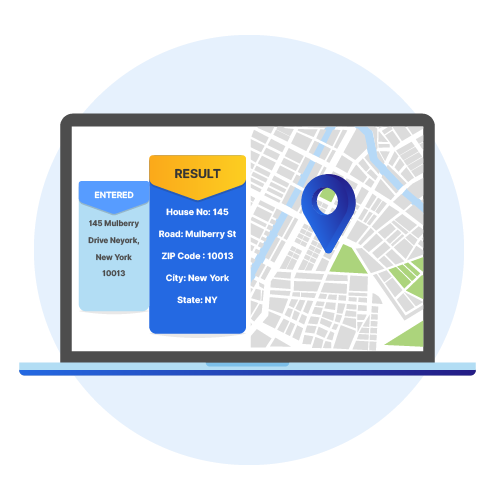
That’s where the international address validation API plays a pivotal role. By validating, correcting, and formatting address data in real-time or bulk, this API is essential to ensure the accuracy and reliability of international customer information.
In this article, we explore how using an international address validation API dramatically enhances global data accuracy and why it should be at the heart of any global operation’s data management strategy.
1. Understanding International Address Complexity
Diverse Address Formats
Every country formats addresses differently. A U.S. address may include a ZIP code and state, while a German address follows an entirely different structure. Examples include:
-
US: 1600 Amphitheatre Parkway, Mountain View, CA 94043
-
UK: 221B Baker Street, London NW1 6XE
-
India: 5th Cross Road, Indiranagar, Bangalore – 560038
An international address validation API understands these format variations and normalizes them into consistent, system-ready data.
Language and Script Variations
Global addresses are entered in different languages and scripts, such as:
-
Cyrillic (Russia)
-
Kanji (Japan)
-
Latin (Europe, Americas)
-
Arabic (Middle East)
A reliable API supports Unicode and processes addresses regardless of the script used.
2. Real-Time Validation for Immediate Accuracy
Error Prevention at the Point of Entry
When users enter address data on forms, validation should occur immediately. The international address validation API:
-
Autocompletes addresses based on country-specific databases
-
Suggests corrections for typos and inconsistencies
-
Validates the existence of the address in real time
This minimizes manual errors and ensures only clean, validated data enters your system.
User-Friendly Autocomplete
Autocomplete not only improves user experience but also standardizes inputs. Instead of free-text chaos, an API-powered system returns structured, validated components like:
-
Street name
-
Building number
-
Postal code
-
City
-
Region
3. Batch Processing for Database Hygiene
Cleaning Existing Records
Businesses often maintain large, outdated address databases that are riddled with inaccuracies. A batch validation feature lets you:
-
Validate entire databases at once
-
Remove invalid, incomplete, or outdated entries
-
Standardize format across all international regions
This helps maintain a healthy CRM and eliminates duplicate or erroneous entries.
Integration with Data Pipelines
Leading APIs integrate with data platforms like:
-
Salesforce
-
HubSpot
-
AWS and Azure data lakes
-
ETL tools
This allows real-time and batch address validation as part of your regular data operations.
4. Improved Delivery Accuracy and Logistics
Eliminating Failed Deliveries
Incorrect international addresses cause undelivered packages, customer complaints, and loss of trust. APIs verify that an address:
-
Exists and is deliverable
-
Matches official postal databases
-
Is correctly formatted for the destination country
Geocoding for Route Optimization
APIs often include geocoding (latitude and longitude) with address data, enabling:
-
Efficient route planning
-
Faster last-mile delivery
-
Reduced fuel and labor costs
This is especially valuable for logistics, food delivery, and e-commerce fulfillment centers operating internationally.
5. Strengthening Global Compliance Efforts
GDPR and Data Accuracy Standards
Under GDPR, businesses must maintain accurate and up-to-date personal data. Invalid addresses can lead to compliance risks, fines, and damaged reputations.
An international address validation API helps:
-
Keep customer data current
-
Enable data audits
-
Track validation logs for compliance reviews
KYC and AML in Regulated Industries
For banking, insurance, and fintech, Know Your Customer (KYC) and Anti-Money Laundering (AML) laws require validated addresses.
The API ensures:
-
Identity verification
-
Address legitimacy
-
Country-specific validation logic
6. Better Customer Segmentation and Personalization
Region-Based Campaigns
Validated addresses allow accurate segmentation by:
-
City
-
State
-
Country
-
Postal code range
This fuels more effective, localized marketing and direct mail campaigns.
Improved Personalization
Clean and verified address data allows businesses to send hyper-personalized messages, offers, and products tailored to regional demographics.
7. Integration Across Business Functions
Sales and Marketing Systems
By validating address data in CRMs and email platforms, sales teams avoid:
-
Wasted time on unreachable leads
-
Mismatched territories
-
Poor lead scoring
Finance and Billing
Accurate addresses ensure that invoices and statements reach the correct location, reducing late payments and disputes.
Customer Support
Address accuracy reduces the need for support agents to resolve shipping or account access issues, improving customer experience.
8. Supporting Global Expansion
Frictionless Market Entry
Businesses expanding into new countries can avoid address-based challenges by integrating an international address validation API from day one.
Benefits include:
-
Accurate address collection from global users
-
Support for localized address rules
-
Preemptive detection of formatting errors
Multi-Currency and Tax Localization
Address validation is key to applying correct tax rates, shipping fees, and localized pricing—helping you expand without regulatory missteps.
9. Enhancing Analytics and Business Intelligence
Location-Based Insights
With geocoded address data, your analytics team can extract valuable insights like:
-
Regional demand
-
Market penetration
-
Distribution effectiveness
Better Demand Forecasting
Knowing where your customers live enables accurate forecasting for inventory, staffing, and promotional events across regions.
10. Reducing Operational Costs
Fewer Returns and Re-Shipments
Every failed delivery adds to your cost. Validating international addresses helps you avoid:
-
Extra shipping costs
-
Lost merchandise
-
Additional handling fees
Lean Customer Support
Support tickets drop when customers receive their shipments correctly the first time. This reduces the burden on support staff and cuts staffing costs.
11. Improved Customer Trust and Satisfaction
Faster, More Reliable Delivery
Nothing builds trust like timely delivery. With validated addresses, businesses can promise—and deliver—on estimated timelines.
Professionalism and Accuracy
Consistently formatted addresses in emails, invoices, and packages reflect attention to detail and build brand reputation.
12. Key Features to Look For in an International Address Validation API
| Feature | Why It Matters |
|---|---|
| Global Country Support | Validates addresses across 240+ countries |
| Real-Time Validation | Provides instant feedback on entry errors |
| Bulk Processing | Enables cleaning of legacy data in large volumes |
| Geocoding | Supplies latitude and longitude for each address |
| Multilingual Support | Supports various scripts and local languages |
| Postal Authority Integration | Uses official government databases for validation |
| Easy Integration | Offers SDKs and APIs in multiple languages |
| SLA and Uptime Guarantees | Ensures reliability in high-availability systems |
13. Common Use Cases by Industry
E-Commerce
-
Cart abandonment reduction
-
Fulfillment accuracy
-
Return logistics optimization
Healthcare
-
HIPAA-compliant patient mailing
-
Correct medical billing
-
Data integrity in patient records
Finance
-
Global account verification
-
Fraud prevention
-
Tax jurisdiction mapping
Travel and Hospitality
-
Accurate guest records
-
Tailored offers based on location
-
Loyalty program segmentation
14. Choosing the Right API Provider
Key Evaluation Criteria
-
Coverage: Can the API validate addresses in all the countries you serve or plan to enter?
-
Speed: Is the API capable of validating thousands of entries per second?
-
Reliability: What uptime is guaranteed in the SLA?
-
Security: Does the provider comply with SOC 2, ISO 27001, or HIPAA?
-
Support and Documentation: Are SDKs, support teams, and technical guides readily available?
Popular Providers
While many options exist, choose providers who specialize in international validation and offer advanced features like fuzzy matching, auto-suggestions, and address enrichment.
15. ROI of Implementing an International Address Validation API
Quantifiable Returns
| Benefit | Estimated Impact |
|---|---|
| Reduced Failed Deliveries | 5–20% decrease in returns |
| Increased Checkout Conversion | 5–15% increase due to autocomplete and accuracy |
| Reduced Customer Support Load | Up to 25% fewer tickets related to shipping issues |
| Improved Marketing Performance | 10–30% improvement in targeting effectiveness |
Long-Term Strategic Value
-
Clean data across all regions
-
Simplified global compliance
-
Stronger customer relationships
-
Data-driven decision-making with accurate geo-tagged data
Conclusion: Achieving Global Data Accuracy with the Right API
Data accuracy isn’t a nice-to-have—it’s a non-negotiable asset in a digital-first, borderless world. An international address validation API is not just a tool—it’s a catalyst for efficiency, compliance, trust, and growth. It ensures every address in your system is formatted, verified, and ready for action, whether you’re delivering a package to Berlin, onboarding a client in Tokyo, or launching a campaign in São Paulo.
Final Takeaways
-
Use real-time validation to prevent errors at data entry
-
Batch clean your legacy databases for consistency
-
Support logistics, marketing, and billing operations worldwide
-
Improve compliance with GDPR, CCPA, and other regulations
-
Choose an API that scales with your global ambitions
Investing in an international address validation API pays dividends across your organization—starting with better data and ending with better business outcomes.