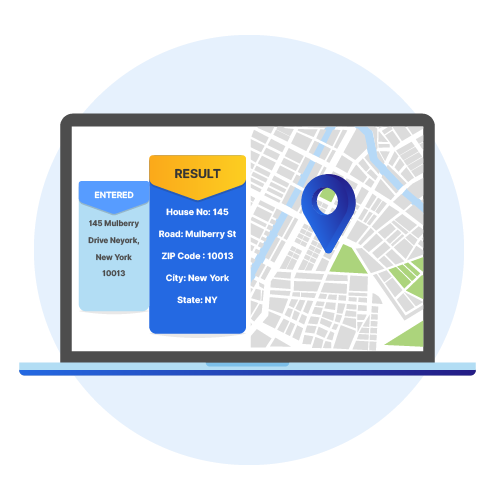
Introduction: The Need for Accurate Global Addressing
In a world where business is increasingly global, managing accurate address data across international borders is a critical operational concern. Whether you’re running an e-commerce platform shipping worldwide, a multinational billing service, or a logistics company managing millions of deliveries, bad address data can lead to severe problems—misdeliveries, customer complaints, lost revenue, and more.
This is where an international address validation API becomes essential. Designed to standardize, verify, and correct addresses in real time across countries, this API provides the digital infrastructure modern businesses need to operate efficiently at scale.
In this comprehensive guide, we’ll break down the top benefits of using an international address validation API, exploring how it helps optimize operations, improve customer satisfaction, and boost the bottom line.
1. Global Address Accuracy at Scale
Eliminating Human Error
Address data entered manually is prone to mistakes—typos, misspellings, missing components, or incorrect postal codes. These errors become exponentially more damaging when handling international addresses, which vary widely in format and content.
An international address validation API:
-
Validates entries in real time
-
Corrects known errors automatically
-
Flags incomplete or invalid inputs
Standardizing Diverse Formats
Each country has unique address rules. An API automatically adjusts formats based on the country—for example:
-
UK: “Flat 2, 34 London Road, Brighton BN1 4JF”
-
Japan: “〒150-0001 東京都渋谷区神宮前1丁目1−1”
Standardization ensures that the address complies with local delivery systems, reducing failure rates.
2. Enhancing Delivery Success Rates
Avoiding Undeliverable Shipments
Every failed delivery translates to wasted shipping costs, delayed fulfillment, and disappointed customers. Address validation APIs integrate with postal authority databases (like USPS, Royal Mail, La Poste, and others) to verify whether an address is deliverable.
This means:
-
Fewer returns
-
Lower costs due to undeliverable mail
-
Increased operational efficiency
Reduced Last-Mile Delivery Errors
Inaccurate or incomplete address data causes last-mile confusion for logistics providers. An international address validation API improves last-mile efficiency by offering clean, structured, and geocoded data.
3. Optimizing International Checkout Conversion
Faster, Error-Free Form Filling
In e-commerce, a complex or error-prone checkout process leads to cart abandonment. With an international address validation API embedded into your checkout flow:
-
Customers get auto-suggestions as they type
-
Country-specific fields appear dynamically
-
Errors are corrected before submission
This results in:
-
Smoother user experience
-
Higher conversion rates
-
Fewer abandoned carts
Localized User Experience
APIs that offer localized address formatting and language support enhance trust and usability. A French customer sees “Code Postal” while a Japanese buyer sees the form fields in Kanji, for example.
4. Clean, Consistent CRM and ERP Data
Avoiding Duplicate Records
Messy, inconsistent addresses can lead to duplicate records in your CRM or ERP systems, making segmentation, targeting, and analysis difficult.
A validation API prevents this by:
-
Normalizing entries
-
Merging similar records
-
Providing consistent field structures
Improving Lead Quality and Attribution
With verified address data, lead scoring and regional attribution become far more reliable. Sales teams spend less time fixing bad leads and more time closing quality ones.
5. Supporting Regulatory Compliance
Data Accuracy Laws
Many global regulations—including the GDPR (Europe), CCPA (California), and others—require companies to maintain accurate, up-to-date customer data.
An international address validation API helps ensure compliance by:
-
Updating outdated address fields
-
Removing undeliverable entries
-
Providing audit logs for validation
Cross-Border Tax Compliance
For businesses charging VAT, GST, or calculating shipping duties based on region, validated addresses ensure correct tax zone classification.
6. Improving Direct Mail ROI
Precision Targeting
Marketing teams rely on postal addresses for direct mail, catalogs, and promotional materials. Sending to outdated or undeliverable addresses wastes printing and postage costs.
Benefits of validated address lists:
-
Higher delivery rates
-
Better campaign performance
-
Reduced bounce-back costs
Enhanced Segmentation
With standardized global address data, you can segment audiences by country, region, or city with confidence—fueling more personalized and localized marketing campaigns.
7. Strengthening Fraud Detection
Validating Customer Identity
Fraudsters often enter fake or mismatched address data during checkout or account registration. An international address validation API flags:
-
Nonexistent postal codes
-
Mismatched city/region/postal combinations
-
Repetitive or disposable data
Reducing Chargebacks
Shipping to unverified addresses increases the risk of disputes and chargebacks. Verifying that an address exists and matches billing data protects both the business and the customer.
8. Real-Time and Batch Processing Flexibility
Real-Time API Validation
Most APIs validate addresses at the point of entry—checkout, form submission, or sign-up. This stops bad data before it enters your system.
Bulk Batch Processing
APIs also offer batch validation for existing databases. This is useful when:
-
Migrating data to a new platform
-
Running a compliance audit
-
Cleaning up outdated lists
9. Improved Geolocation and Analytics
Pinpoint Accuracy
Many validation APIs also return geocoding data—latitude and longitude coordinates linked to the address. This enables:
-
Route optimization
-
Location-based analytics
-
Geo-targeted marketing
Enhanced Logistics Planning
With verified geodata, logistics teams can:
-
Calculate accurate delivery times
-
Plan vehicle routes efficiently
-
Reduce fuel and labor costs
10. Multi-Language and Unicode Support
International Script Handling
Global users may input addresses in:
-
Cyrillic (Russian)
-
Kanji (Japanese)
-
Arabic
-
Latin alphabets
The API ensures support for various character sets, making sure nothing breaks or is misinterpreted.
Localized API Responses
For multinational businesses, some APIs provide address validation feedback and corrections in the user’s local language, improving clarity and usability.
11. Scalability for Global Expansion
Supports Growing Demand
As your business scales internationally, so does your need for address data integrity. A good international address validation API grows with you, offering:
-
Flexible usage plans
-
Enterprise-level SLAs
-
Failover and uptime guarantees
Expanding Market Reach
By removing the friction of international address formatting, the API empowers your business to sell and deliver to virtually any corner of the world.
12. Easy Integration into Existing Workflows
API-First Architecture
Most providers offer:
-
RESTful endpoints
-
SDKs in popular languages (Java, Python, PHP, Node.js)
-
Plugins for platforms like Shopify, Salesforce, HubSpot, Magento
Minimal Developer Overhead
Setup usually involves just a few lines of code and a test API key. From there, you can customize validation rules, fallback behavior, and response formats.
13. Industry Use Cases
E-commerce
-
Real-time shipping validation
-
Checkout form autocomplete
-
Reduced return shipments
Healthcare
-
Patient statement mailing accuracy
-
Insurance policy verification
-
HIPAA-compliant address standardization
Finance and Insurance
-
KYC (Know Your Customer) compliance
-
Tax jurisdiction accuracy
-
Secure document delivery
Logistics and Shipping
-
Route planning
-
Hub zoning and mapping
-
Last-mile delivery efficiency
14. Cost Savings and Operational Efficiency
Reduced Customer Support Load
Fewer delivery issues mean fewer calls and emails to your support team.
Lower Shipping and Postage Costs
With fewer re-shipments, print reruns, and corrections, the ROI of the API quickly surpasses its subscription cost.
More Efficient Data Teams
Your analysts, marketers, and salespeople spend less time cleaning data and more time using it strategically.
15. Key Features to Look For
| Feature | Description |
|---|---|
| Country Coverage | Must support all your current and target markets |
| Geocoding | Provides coordinates for mapping and routing |
| Multilingual Support | Accepts and returns results in multiple languages |
| Postal Authority Integration | Real-time data from USPS, Royal Mail, etc. |
| Batch & Real-Time Modes | Versatility for different workflows |
| Security & Compliance | GDPR, SOC 2, HIPAA compatibility |
| Easy Integration | Pre-built plugins and clear documentation |
Conclusion: The Smartest Step for Global Business
Today’s businesses must operate with global precision. Whether you’re an e-commerce brand shipping globally, a B2B company serving international clients, or a logistics provider managing large fleets, address data accuracy is not just nice to have—it’s mission-critical.
Implementing an international address validation API helps ensure that every piece of address data in your system is correct, formatted, and verified. The benefits span nearly every department—from IT and operations to sales, marketing, and compliance.
Quick Recap: Top Benefits
-
Real-time address correction
-
Lower return and re-shipment costs
-
Better customer satisfaction
-
Faster, error-free checkout
-
Cleaner CRM/ERP databases
-
Regulatory compliance
-
Increased operational efficiency
By adopting an international address validation API, you’re not just cleaning up data—you’re creating a foundation for sustainable, scalable international growth.