Introduction: The Global Commerce Boom
In today’s hyper-connected world, businesses are no longer limited by geography. E-commerce, global logistics, international billing, and remote service delivery have opened doors to customers worldwide. But with this expansion comes a critical challenge—ensuring the accuracy of international address data.
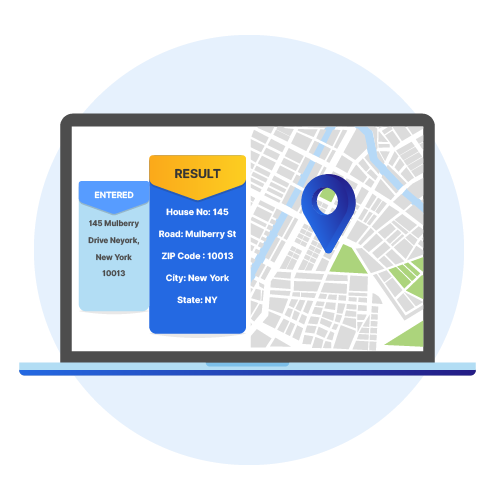
Enter the international address validation API, a powerful tool that helps businesses standardize, correct, and verify address data across countries in real time. Inaccurate addresses lead to lost packages, failed transactions, and customer frustration—issues that can be eliminated with the right API in place.
In this article, we’ll explore why businesses of all sizes need an international address validation API, the problems it solves, and how it improves operational efficiency, customer satisfaction, and profitability.
1. Understanding International Address Validation
What Is an?
An international address validation API is a web-based service that checks the accuracy and completeness of global address inputs. It ensures that postal addresses entered into systems are:
-
Real and existing
-
Properly formatted for the country of origin
-
Complete with postal codes, cities, and regions
-
Standardized per local postal authority guidelines
How It Works
The API typically receives an address input (via website form, CRM, or checkout field), and:
-
Parses and verifies the address components.
-
Corrects formatting errors.
-
Autocompletes missing information.
-
Validates the address against official postal databases like USPS, Royal Mail, Canada Post, etc.
-
Returns a validated and formatted version for database storage or delivery use.
2. The Cost of Bad Address Data
Shipping Failures and Lost Deliveries
One of the most expensive consequences of incorrect addresses is undeliverable shipments. International shipping costs are high, and failed deliveries result in:
-
Return shipping fees
-
Replacement product costs
-
Delays in fulfillment
-
Customer dissatisfaction
Billing and Payment Issues
For companies that send international invoices or statements, a bad address can result in:
-
Missed payments
-
Compliance risks (e.g., GDPR, VAT notices)
-
Operational bottlenecks
Marketing Campaign Waste
Direct mail marketing sent to the wrong international addresses results in poor ROI, wasted printing and postage costs, and brand reputation damage.
3. Challenges in Global Address Data
Different Country Formats
Each country has its own postal address format. For example:
-
U.S.: Street address → City → State → ZIP
-
Japan: Postal code → Prefecture → City → Street → Building
Language and Character Set Variations
Addresses may be input in:
-
Local language scripts (e.g., Japanese, Cyrillic, Arabic)
-
Romanized transliterations
-
Abbreviated forms or colloquial terms
Incomplete or Ambiguous Inputs
Users often enter:
-
Misspelled cities
-
Incorrect postal codes
-
Missing unit numbers
Data Entry Errors at Scale
Large companies process thousands of addresses daily. Even a 1–2% error rate can result in hundreds of delivery failures per month.
4. How an International Address Validation API Solves These Problems
Real-Time Validation
Most APIs work instantly during form submission, catching and correcting address issues before they’re saved or used.
Global Coverage
A robust international address validation API covers:
-
240+ countries and territories
-
Local postal authority datasets
-
Up-to-date formatting and postal rules
Standardization and Formatting
Addresses are returned in a standardized, mail-ready format according to local postal guidelines. This ensures:
-
Accurate label printing
-
Easy sorting by carriers
-
Less manual handling
Multilingual and Geolocation Support
Many APIs support:
-
Unicode (for non-Roman alphabets)
-
Localized results
-
Geocoding (latitude/longitude tagging)
5. Key Business Use Cases
E-Commerce
Validate shipping addresses at checkout to avoid delivery issues and improve customer experience.
Logistics and Fulfillment
Ensure warehouses are shipping to real and deliverable locations, globally.
Finance and Insurance
Validate addresses used in international billing and compliance documentation.
Healthcare and Pharma
Ensure accurate delivery of sensitive items like medical equipment and prescription shipments.
Direct Mail and Marketing
Improve response rates and ROI on international print campaigns.
6. Benefits of Using an International Address Validation API
a. Reduced Shipping Costs
-
Fewer returns and reshipments
-
Optimized carrier routing
-
Less manual correction effort
b. Enhanced Customer Satisfaction
-
Faster delivery times
-
Accurate and personalized service
-
Fewer support inquiries about failed deliveries
c. Improved Data Quality
-
Cleaner CRM databases
-
Fewer duplicates
-
Consistent formatting across systems
d. Regulatory Compliance
-
Accurate VAT zone assignment
-
Proof of residence verification
e. Increased Marketing Efficiency
-
Higher deliverability for direct mail
-
Improved segmentation accuracy
-
Reduced bounce rates
7. Integration and Workflow Automation
Easy API Integration
Most international address validation APIs integrate easily with:
-
E-commerce platforms (Shopify, Magento, WooCommerce)
-
CRMs (Salesforce, HubSpot, Zoho)
-
ERPs and fulfillment tools
-
Custom apps via RESTful endpoints
Batch and Real-Time Modes
Businesses can validate addresses:
-
In real-time during entry (checkout or form fill)
-
In bulk via scheduled batch processing
8. Features to Look for in an International Address Validation API
Global Coverage
Ensure the API supports all countries you operate in or plan to expand to.
Local Format Support
The API should return addresses in proper localized formats, including optional fields.
Postal Authority Backing
Top providers source data directly from:
-
USPS (United States)
-
Royal Mail (UK)
-
La Poste (France)
-
Deutsche Post (Germany)
-
Australia Post
-
And many more
Geolocation and Mapping
Some APIs offer geocoding (lat/lon) to support analytics, delivery routing, and fraud detection.
Scalability and Speed
Choose an API that can handle high traffic with sub-second response times.
Security and Compliance
-
HTTPS encryption
-
Data anonymization
-
Region-specific compliance (GDPR, CCPA, etc.)
9. Case Studies: Real Business Impact
Case 1: Global E-Commerce Brand
Problem: High volume of failed international deliveries
Solution: Implemented an international address validation API at checkout
Results:
-
95% reduction in shipping errors
-
22% decrease in customer service tickets
-
$25K annual savings in shipping costs
Case 2: SaaS Billing Platform
Problem: Invoices undeliverable to international customers
Solution: API integration in customer onboarding form
Results:
-
100% valid address database
-
Improved compliance with regional tax laws
-
Faster invoice cycle times
10. Choosing the Right International Address Validation API
Top Providers to Consider:
-
Loqate
-
Melissa
-
Smarty
-
Google Address Validation API
-
PostGrid
-
Tommorow.io (for location intelligence)
Evaluation Checklist:
| Feature | Must-Have? |
|---|---|
| Country coverage | ✅ |
| Localized formatting | ✅ |
| Batch validation | ✅ |
| CRM/e-commerce integration | ✅ |
| Security certifications | ✅ |
| SLA and uptime guarantees | ✅ |
11. Getting Started with Implementation
Step 1: Audit Your Current Address Collection Workflow
Identify where addresses are being entered—web forms, CRM inputs, checkout flows.
Step 2: Choose an API Provider
Based on your geography, data privacy requirements, and traffic volume.
Step 3: Test in Sandbox Mode
Most vendors offer trial keys or sandbox environments for development.
Step 4: Deploy with Error Handling
Integrate the API with form-level error messages or autofill suggestions for best UX.
Conclusion: Accuracy Is a Global Competitive Advantage
As businesses grow across borders, the risks and costs of inaccurate address data multiply. Whether you’re shipping products, mailing invoices, or verifying customer identity, a reliable international address validation API is no longer optional—it’s essential.
From saving on logistics to improving customer experience and ensuring regulatory compliance, the benefits of implementing a validation API compound quickly.
If your business touches international markets in any way, the smartest move you can make today is investing in global address validation.